

The weather has turned decidedly warmer now and creatures are venturing out to see what spring has to offer. This pair of deer were ambling leisurely through the yard - the photos were taken through a screen - so they're a little bit fuzzy.

Best of all is that the Goldfinches have returned!! I am always thrilled to see their beautiful golden wings flitting around the feeders. Sort of the same way I feel when the Hummingbirds come home to feed in March. Goldfinches are so glorious - and they make me smile! Spring is full of these small gifts from Nature.

The following Goldfinch information is from the Cornell Lab of Ornithology - if you are a bird lover and don't know about the site yet - you owe it to yourself to check it out ! I love the feature that identifies the particular bird's song!
-
Size & Shape
A small finch with a short, conical bill and a small, head, long wings, and short, notched tail.
-
Color Pattern
Adult males in spring and early summer are bright yellow with black forehead, black wings with white markings, and white patches both above and beneath the tail. Adult females are duller yellow beneath, olive above. Winter birds are drab, unstreaked brown, with blackish wings and two pale wingbars.
-
Behavior
These are active and acrobatic little finches that cling to weeds and seed socks, and sometimes mill about in large numbers at feeders or on the ground beneath them. Goldfinches fly with a bouncy, undulating pattern and often call in flight, drawing attention to themselves.
-
Habitat
The goldfinch’s main natural habitats are weedy fields and floodplains, where plants such as thistles and asters are common. They’re also found in cultivated areas, roadsides, orchards, and backyards. American Goldfinches can be found at feeders any time of year, but most abundantly during winter.
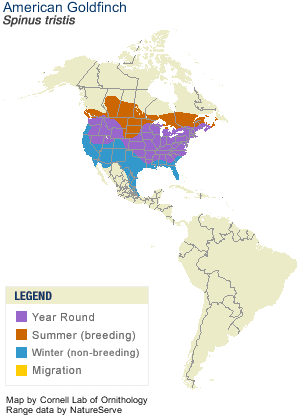
View dynamic map of eBird sightings


